Tuesday, 11 February 2020

LATEST INTERNATIONAL AND LOCAL NEWS


A Coronavirus Patient Taken to Hospital

The coronavirus death toll in China reached up to 1.000 unfortunate people, while the cases of infection soar to 42.638, according to the World Health Organization report.  China and the WHO will form a team of experts to conduct discussions and valuations of the new coronavirus epidemic, they will also welcome international expert help. This novel coronavirus is a new strain that has not been previously identified in humans and according to the BBC, scientists are racing to find a vaccine against the spread and virulence of this horrendous infection.

A Chinese patient at the Attikon Hospital, in Athens, is suspected of having contacted coronavirus.PLEASE DON'T FORGET THAT THE PARTHENON MARBLES MUST RETURN TO GREECE.
NEW DEMOCRACY IS EXCELLENT FOR GREECE.  


PLEASE DON/T FORGET THAT THE PARTHENON MARBLES MUST RETURN TO GREECE.
NEW DEMOCRACY IS GOOD FOR GREECE. 


Flooding Chaos in Britain


According to The Guardian, storm Chiara caused heavy damages and disruptions across the UK, on Sunday, bringing downpours and heavy flooding, damaging numerous properties and the cancellation of trains, flights and ferries.  Moreover, certain areas were left without power.


Not Even a Penny for his Thoughts

Donald Trump was, unfortunately, acquitted by the Senate on the impeachment trial.  Sensible people worldwide are bewildered how the citizens of one of the largest and most powerful countries of the world could have voted for such an absurd president, to say the least.


2020 Oscar Winners

In the Academy Awards 2020, "Parasites", a South Korean film, directed by Bong Joon Ho won four Oscars in one night: Best film, directorship, original screenplay and best international feature film.  The first time a non-English spoken picture received this tremendous honour.

Brad Pitt won an Oscar for "Once upon a time in Hollywood" and Laura Dern won an Oscar for best supporting actress for playing a divorced lawyer in "Marriage Story".  Moreover, Renee Zellweger was awarded the same honour for recreating Judy Garland and Joaquin Phoenix won the Best Actor Award for his performance in Jocker.


Greece has been in a deep economic crisis for the last ten years and has had dramatic negotiations with our European partners, all searching for a solution that would avert the country's exit from the Eurozone.  If this had happened it would have been critical not only for the European Union but it would have, also, ruptured the global markets, including Wall Street, a domino effect.

Since August, the Greek government has tried to show that austerity is partly over, by providing additional funds to the lower and middle classes.  We all sincerely hope that our country will revive economically, in the not so distant future.

One of the most tragic consequences of the crisis is that a large number of bright young people have left the country.   In 2016, about 34.000 youngsters left Greece seeking for jobs elsewhere according to the Oxford Analytica Company, because Greece's unemployment is still the highest in the Eurozone.

We all pray and hope that our country will, soon, be out of this horrendous credit crunch and will be climbing to prosperity, step by step, so that, among others, these talented young Greeks will choose to return home.


(I wish to thank Oxford Analytica Company, ERT, STAR TVgr, BBC, CNN and FRANCE 24, also the Kathimerini, Estia, The Times and The Guardian for the valuable information for this post)


An Ancient Map of Greece with her Colonies


I am giving you below several recipes pertaining to the above countries.


                                      KOREAN FRIED CHICKEN WINGS


A delicious dish of the Far East.

500 g chicken wings
Salt and freshly ground black pepper to taste
A large chunk of ginger, finely grated
50 g cornflour
vegetable oil for frying
Sesame seeds and finely sliced spring onions

Sauce:
6 tbsp dark brown sugar
2 tbsp chilly paste
1 tbsp soy sauce
2 cloves garlic, crushed
A small piece of ginger, grated
2 tbsp sesame oil

A popular British dish.

 First, prepare the sauce.  Gently simmer all the ingredients for 3-4 minutes until syrupy and set aside.

 Season the chicken wings with freshly ground black pepper, a very little salt and grated ginger. Then toss the chicken with cornflour until well coated.

Saute the chicken wings in about 2 cm of vegetable oil for 8-10 minutes until crisp and golden, turning round halfways.  Place on kitchen paper to drain and allow to cool for 2 minutes.

Heat the sauce and toss the crisp chicken wings in it.  Arrange on a serving dish and garnish with sesame seeds and sliced spring onions.


                                                   CUMBERLAND PIE


)


A fabulous main dish from Britain.

2 celery sticks, threaded and finely sliced
1 onion, chopped
3 carrots, peeled, halved lengthwise and thickly sliced
1 bouquet garni (4 bay leaves + 3 thyme leaves + 1 small sprig of rosemary)
2 tbsp vegetable oil mixed with
2 tbsp butter
2 tbsp plain flour
2 tbsp tomato puree
1 1/2 tsp Worcestershire sauce
1 kg (2 lb) beef cut into chunks
2 beef stock cubes
1 kg (2 lb) potatoes, peeled and sliced
25 g mature Cheddar,  thickly grated
25 g Parmesan, finely grated

Preheat oven to 160 C (    F).  Saute the celery, onion, carrots and herb bouquet in vegetable oil and butter.  Stir in the flour and cook for 3-4 minutes, then add the tomato puree, Worcestershire sauce and stock cubes.

Gradually stir in 750 ml (2 1/2 cups) hot water, then add the beef and bring to a gentle simmer.  Cover snd cook in the oven for about 2 hours or until the meat is tender and the sauce thickens.

Meanwhile, partly cook the potatoes in boiling salted water.  Transfer the meat to as Pyrex dish.  Toss the potatoes with vegetable oil and sprinkle with freshly ground black pepper and thyme leaves. Layer the potatoes over the meat sprinkling with cheese as you layer. 

Increase the oven to 180 C (350 F) and bake for 30-40 minutes until golden and crispy znd the sauce bubbles.  Serve with a green salad.

Transfer the meat and sauce to a pyrex dish.   Gently toss the potatoes with salt and pepper a few thyme leaves and drizzle with vegetable oil. 


                                                       APPLE PIE


This is a lovely aromatic apple pie which is very popular in the US


Pastry:
120 g (4 oz) butter
150 g (5 oz) brown sugar
1 egg
150 g (5 oz) powdered almonds
150 g (5 oz) self-raising flour
1 liqueur glass water
1 liqueur glass brandy
1 pinch of cinnamon
1 pinch of nutmeg
1 pinch of salt

Egg-wash for brushing over the crust
1 tbsp brown sugar for sprinkling over


Filling:
1½ kg (3 lb) apples, pared, finely sliced and sprinkled with lemon juice
2 heaped tbsp cornflour
3 tbsp sugar
 ½ tbsp cinnamon
 ½ tsp grated nutmeg


 Cream butter and sugar, then add all the other ingredients for the pastry and mix all together until a soft dough is obtained. Cover with cling film and refrigerate for about an hour.

Mix the cornflour with the sugar and spices, sift over the sliced apples and mix gently until all the apples are well coated with the mixture.

 Roll out the dough into 2 circles (0.5 cm thick), one slightly larger than the other.   Place the larger circle in a deep, buttered tart-dish then spoon the filling in and even the surface.   Cover with the second pastry and join the two together, crimping them into a pretty shape.  Make two slashes on the pastry, brush it with egg wash and bake in an oven preheated to 180 C (350 F) for about an hour.

Serve hot with ice cream.


                                                      WALNUT CAKE


This Greek walnut cake is easy to make and ever so light.

180 g (6 oz) butter, softened
180 g (6 oz - 1 cup minus 1 tbsp) caster sugar          
150 g (1 cup) self-raising flour
1 tsp baking powder
A pinch of salt
5 eggs, separated, whites whipped into soft peaks
Vanilla
120 g (4 oz) coarsely chopped walnuts

Ganache:
100 g dark chocolate cut in small pieces
100 ml cream heated
1 tsp honey


 Half walnuts for garnish


 Sift the flour with the baking powder and salt.  Coat the walnuts with spoonful or two
of the flour mixture, and reserve.

 Cream the butter and sugar, add the yolks one at a time and continue beating.  Add the dry ingredients and mix well. Stir in a large spoonful of whipped egg whites to soften the batter.  Stir in the walnuts and, finally, gently fold in the remaining egg whites.   Bake the cake in a moderately hot oven, preheated to 190C (375 F) for about 45 minutes.  Reverse on a round dish and when completely cold cover with a double portion of ganache and garnish with half walnuts.


Flowers by Renoir


Saturday, 8 February 2020

GREECE - (Continued)


The Old House in Kifissia


Saturday, 2nd March 2019.

In my post, GREECE (continued), dated the 18th October 2018, I had written:

"It was a happy and very satisfying period in our lives.  My husband. Aleco, and I were very pleased with our boys progress, we were very fond of their girlfriends and we enjoyed working at our office, which was doing rather well, acquiring considerable profits."

It was also a very busy period in our lives because besides achieving all mentioned above, we also kept an eye on my parents who lived in a flat quite near our house.  My father was strong and active in his nineties, and my mother was still attractive in her seventies and a fabulous hostess.

Our son Spiros was studying chemistry at the Technical University in Munich, where he had met Yianna Christou, a lovely Greek girl, whose parents lived in Thessaloniki.   Her mother, Caterina, was a teacher at a local High school, and her father was a well-known university professor, very popular with his students.

Spiros and Yianna were very much in love and although very young they wanted to get married so they were officially engaged, much to our delight.  Then they returned to Munich where they shared a flat.


The Technical University Munich


Unfortunately, my beloved father died on the 18th of January 1981.


London Bridge


The Eifel Tower and the Sein River Paris

 Yiannis, after getting a bachelor's degree, in Athens, was then in London, visiting the London School of Economics, after being accepted to study for a Masters degree the following academic year.   His girlfriend, Olga Dretakis, a charming Greek girl, was studying biology in Paris.


Monemvassia

Technical University Berlin

On the 1st May 1981, Spiros and Yianna got married at the beautiful, medieval castle town of Monemvassia, near Sparti, where Yianna has a house.  It was a beautiful, traditional wedding and Caterina and I shed tears of happiness.  Then they flew to Germany, where they both continued their studies at the Technical University of Berlin.

Meanwhile, we met Olga's parents, Aliki who was a journalist and Manolis who was a famous orthopedist, and we liked them both very much indeed.


The London School of Economics

Pierre et Marie Curie University, Paris

In September, Yiannis left for London, to study for a Master's degree at the London School of Economics and Olga went to resume her studies at the Pierre and Marie Curie University in Paris.


Much to our delight,  Yianna was pregnant, so we would soon become grandparents!


Sibling Love by Faye Whitteker


Thursday, 6 February 2020

REFUGEES AND IMMIGRANTS

Saturday, the 31st of August 2019.


Arriving on the Greek Islands


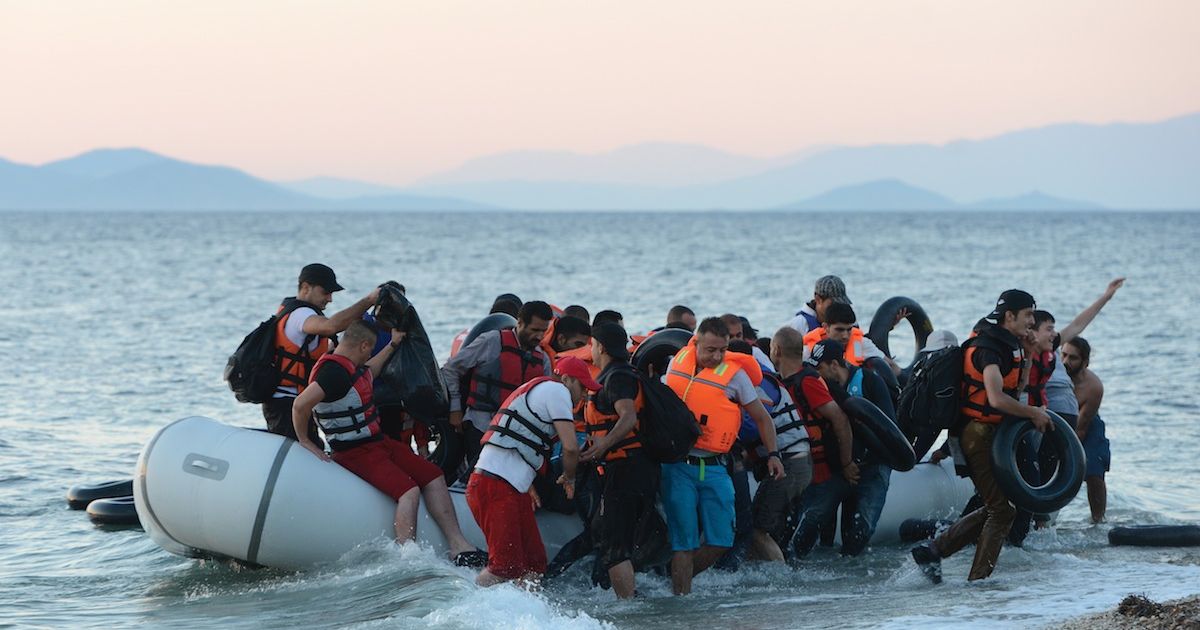
Once more, during the last few days, hordes of immigrants have reached our island shores in the Aegean Sea, arriving from Turkey.  These unfortunate people, devasted by war, are looking for a better life for their families in the European Union, while others, some of whom are illegal, are just trying to find jobs.   This is, obviously a huge problem for Greece.

In 2016, the  European Union and Turkey agreed on a refugee deal,  An important condition of this deal being that immigrants arriving on the Greek islands would be returned to Turkey, except if they applied for and received asylum in Greece.

According to The Times, many of the 50 refugee camps in Greece are in a tragic condition, overcrowded, full of diseases and house unaccompanied minors.  Also, The Times, quoting data from Athens and the United Nations High Commission for Refugees explained that there were 1.570 arrivals in Greece, by sea, in the first week of August, compared with 479 at the same time the previous year.  A tripled augmentation.

In Greece, many International organizations and certain non-governmental organizations are active in helping refugees like the United Nations Refugee High Commission which helps Greece with the refugee problem and we wish to thank them sincerely.

Mr Giorgos Koumoutsakos, who is dealing with the refugee policy,  said on television, on Friday, that 15 asylum seekers, whose applications had been rejected, would be sent back to Turkey.  The minister, also, told the press that 75.000 migrants, in Greece, were having their applications reviewed, including 9.000, whose applications had been rejected and were appealing against the rejection.

The Turkish Foreign Minister warned that he would cancel the 2016 re-admission deal with the EU if the Union rejected to offer visa-free travel for Turkish citizens.  This statement came between growing unease in the Eastern Mediterranean over hydrocarbon resources, and the European Union's decision to "impose punitive measures on Turkey, due to Ankara's increasing efforts for gas drillings off Cyprus."  Furthermore, the President of Turkey, Mr Tayip Erdogan, calls his country the "blue fatherland" and insists that the half Aegean Sea is Turkish including several Greek islands.

These are very crucial diplomatic problems that must be dealt with resolution and solved with wisdom.

Chronologically, this post should have been published before the previous one.

(I wish to thank Estia, Kathimerini, The Times, The Guardian, ERT, STAR TVgr, BBC, FRANCE 24 and CNN for the valuable information for this post)


After 75.000 migrant arrivals in Greece in 2019, international authorities predict the refugee crisis will be continuing in 2020.

The islands of Chios, Lesvos and Samos are carrying the heaviest refugee burden.   According to the North Aegean Police Department, the above islands are holding 62% of the total arrivals, causing desperate overcrowding at the islands' facilities, which are designed to host much lesser numbers.

The Greek Government are trying to transfer all vulnerable groups, such as families, the sick and disabled and unaccompanied minors from the island camps to alternative accommodation on the mainland, but, unfortunately, as fast as people leave, more arrive.

Until the last weekend, the number of the asylum seekers on the overcrowded Moria camp, at Lesvos had reached 18.747, 1.150 of which were unaccompanied children.  The overall number of children in Moria has reached 6.500.

It remains to be seen if the refugee crisis can be effectively handled by the Greek government.   Measures have already been taken to speed up the asylum application process, such as transfer of people from the islands to the mainland, as well as tougher legislative measures and border security with the help of Frontex.  The Greek state faces the same problems as the previous years and the United Nation's High Commissioner for Refugees, Filippo Grande, stated that Greece needs help from international organizations as well as fellow EU member states.

The new Greek Government has introduced stricter legislation on migration, with the aim of limiting new arrivals as much as possible, it increased deportation of failed asylum seekers and has established more restrictive holding centres.  This came into force after huge waves of arrivals of migrants and refugees occurred recently, leaving tons of thousands of people crammed into small identification and reception centres, which have long exceeded their capacity.


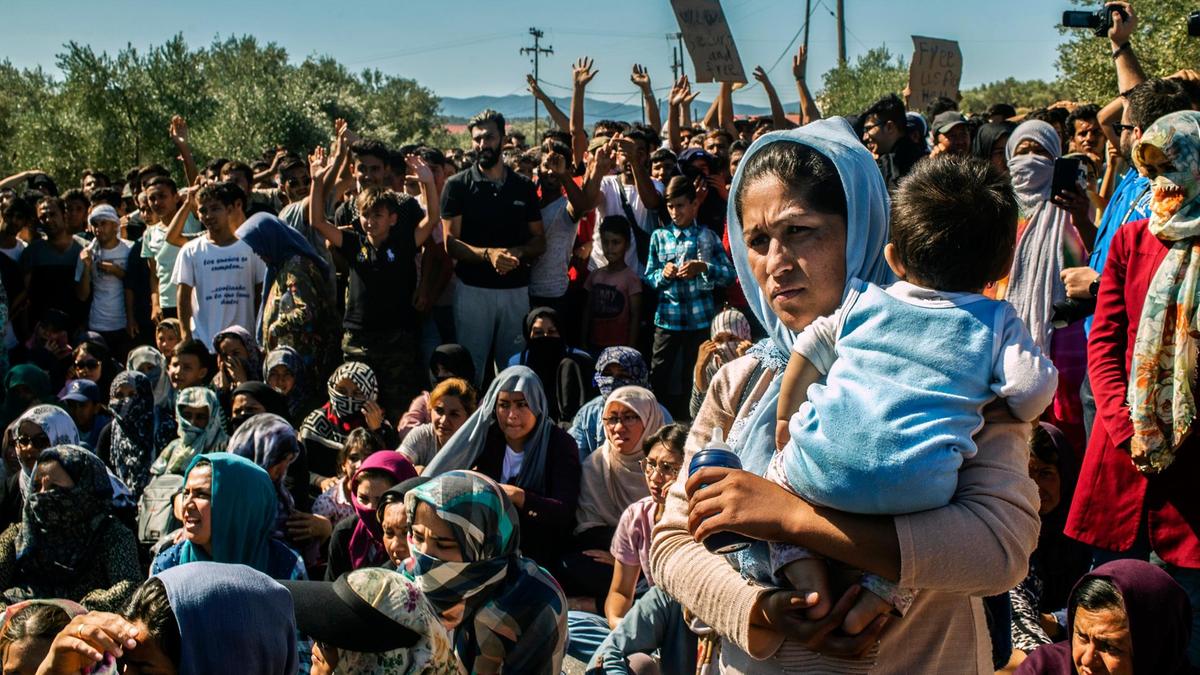
More than 2.000 refugees, mostly Afghanis, from the Moria camp in Lesvos protested, chanting aradi aradi which means freedom.  They were protesting against "the horrendous conditions" in Moria which they referred to as "hell".  They might be right, but we did not invite to visit our country.   As mentioned above, the camps are cramped, but we can only afford to offer food, water and medical assistance.

On the other hand, the hospitable residents of Lesvos more than 9.000 people protested against the migration policy, shouting "We want our island back!"  It was the largest protest in the island's history.  Two sides of the same problem.


9.000 People Protesting Against the Migration Policy at Lesvos Harbour


Wednesday, 5 February 2020

FLOODS IN GREECE

On Monday, the 25th of November 2019, thunderstorms swept through Greece, causing heavy flooding and disruption to sea transport. Unfortunately, the Coast Guard reported today that two men were killed when their moored vessel capsized in Antirio, western Greece.


Floods in Attica

The storm called Gyrionis caused havoc across the country, destroying roads and flooding buildings.   The damage was unaccountable and the Police and Fire Brigade received more than 64 calls to save people from their flooded homes, in the area of Kinetta, near Athens.  Also, the heavy downpour and debris from the mountains blocked the Athens-Corinth highway, and many cars were swept away by the fury of the waters.  In Katerini, northern Greece, the roads resembled rivers.


Katerini
Damage in Katerini

Floods in Northern Greece


Simi Island - Flash Floods - Disaster

Finally, late that night, thunderstorms with strong winds reached the Dodecanese.   The Island of Leros is deluged by the downpour and, unfortunately, an invalid 75-year-old woman found tragic death in her flooded house in Rhodes. 


Moreover, the island of Thassos has been hit for the second time in November by this terrible storm.


(I wish to thank ERT, STAR TV Gr, BBC, France24, CNN, and Kathimerini, Estia, The Guardian, The Times and the blog Greek Reporter for the valuable information for this post.)


We are all looking forward to spring and sunshine!!


The Port Of Argostoli 


Tuesday, 4 February 2020

ALEXANDER D. COCALI

Alexander Cocali, the son of Dimitrios Cocalis and Despina Calvocoressi, was born on the 11.11.1919, in Athens.  He had three older brothers, George, Pericles, and Nicos and they had stayed for eight years on the island of Corfu, which they had extremely enjoyed.  Due to unforeseen circumstances, they returned to Athens and lived in their house in Kypseli, which was, then, an exclusive upper-class neighbourhood, which attracted artists and intelligentsia.

Aleco went to the local primary school and then to the famous 2nd gymnasium of Athens.  Simultaneously, he attended Berkshire School in Athens, which was a department of the British National Education system and studied English, English Literature and the History of the British Isles.  After he went to the Economic University of Athens (ASOE) but World War II broke out and he joined the Greek Royal Navy and was a wireless operator of the Greek Destroyer Leon. 

While the crew was fighting against the Germans, near Crete, Leon was hit and sunk.   Most of the crew was saved due to the proximity to the island and found shelter in a mountainous village, near Chania.  So Aleco and his comrades stayed there until they were arrested by the Germans after the famous Battle of Crete, which began on the 20th May 1941, when Nazi Germany began an airborne invasion of the island.  Despite the heroic defence of Greek and other Allied forces, along with the heroic resistance of the local civilians, the Germans, unfortunate, occupied Crete and, later, the whole of Greece

Aleco was held in a prison camp in Maleme, Crete until December 1941, when he and a few other prisoners managed to escape and sailed for Piraeus.   His family were delighted to see him. They all managed to survive the violence of the German occupation and the lack of food with gratitude for being alive.

After the end of the war and the occupation, Aleco left for  Karachi which was then India.  My parents and I had, also, been trapped in Cephalonia, Greece during the occupation and were very happy to return to Karachi.  I met Aleco when I was a young teenager and a student at Auckland House School in Simla.  So, I went to school and he was sent to Hyderabad, Sind, by the firm for which he worked, Ralli Brothers.

In 1947 the Partition took place,  i.e. India was liberated by the British, but was divided into Hindu India and Muslim Pakistan.

As I could not return to Simla, due to the Partition, I attended Karachi Grammar School, for a year where took a Senior Cambridge degree and then left for Alexandra College Dublin, where I stayed for two years and, finally. I went to Irena, a finishing school in Neuchatel, Switzerland for one year.  I flew back to Karachi and I very soon found an interesting secretarial job at the Belgian Embassy in Karachi.

I started going out with Aleco and we were married at the Christ Church, Karachi on the 8th June 1954 and literally lived happily ever after. He became a successful businessman, created his own firm and was highly respected by both his clients and his adversaries. We have two wonderful sons, two charming daughters-in-law and seven precious grandchildren.

Unfortunately, on the 21st February 2013, Aleco, the love of my life, passed away at the Amalia Flemming Hospital at Melissia, Athens after a short illness.


                                                                 OBITUARY


Aleco Cocali died on the 21st February 2913, at the Amalia Fleming Hospital, Melissia, Athens.  Adored husband for 58 years of Joy, beloved father of Spiros and Janna, John and Elpida, proud grandfather and great-grandfather of Alexander and Tina, Joy, Konstandinos, Stephanos, Alexander, Christophoros and baby Janna, dear brother-in-law of Dolly and Cleo.  He was much loved and respected and will be greatly missed by his family and friends.


Sun Flowers by Vincent van Gogh

I must mention that I now have three fantastic great-grand-daughters, Janna, mentioned above, Sophia, and Nephele, who are the pride of my life!!


Sunday, 2 February 2020

HOME LEAVE 1956 PART II (Continued)

The Greek Orthodox Easter was on the 6th of May.  It was 1956 and we were on home leave.  We were staying in the family house in Kifissia and to our great joy, after so many years, we were going to celebrate Easter in Greece.


All over the country spring was in full bloom.  The garden had a few fir trees, multicoloured rose shrubs, and a wisteria climbed elegantly around the rails of the stairs, leading to the front porch.

A few words about Holy Week and Easter in Greece.  Some of the Greek Orthodox services, during Holy Week, have a considerable amount of ceremony.

On every Good Thursday, during the Holy Passion service and the agony of the Crucifixion, the Twelve Gospels are read.  During vespers,  called the lamentation at the Tomb, the priests remove the body of Christ from the cross and place it in a sepulchre, the Epitaphios a bier symbolizing the tomb of Christ.

On the early hours of Good Friday, the Epitaphios is adorned with the most beautiful of spring flowers, and late in the evening, it is carried with pomp, in a candle-lit procession of priests and faithful, all chanting the beautifully touching hymn "O glyky mou e-ar" (Oh, my sweet spring).  The grief and lamentations for the death and burial of Jesus are commemorated very dramatically by our church.

Late on Good Saturday, the faithful go to church, in anticipation of the resurrection, holding candles.  After a few minutes before midnight, the lights of the churches and the surrounding areas are switched off and the priests light candles from the vigil light and offer it to the congregation.  Then the lead the faithful, holding lit candles outside the church, chanting "Christos Anesti ek Nekron" (Christ has risen from the dead).  All over the land, the church bell ring joyfully, people great each other cheerfully, delighted for being with their loved ones and optimistic for better days.  "Kalo Pascha! Ke tou hronou!" May we all be together next year.


Aleco and I enjoyed the Holy Week and we invited all the Cocalis, my parents and the extended family for Easter lunch.  I didn't know much about cooking then, except for a for few desserts and a quiche or two, but we were lucky to have Margarita Roussos, who was a wonderful cook.  So on Thursday before Easter, dyed Easter eggs, prepared koulourakia, small Easter biscuits and tsourekia, delicious, buttery, aromatic and slightly sweet Easter bread.

On Saturday, I prepared a chocolate dessert, a strawberry pavlova and a quiche Lauren, while Margarita prepared heaps of dolmadakia, wine leaves stuffed with a very tasty minced meat filling drenched with avgolemono sauce.  She also boiled asparagus and made the traditional mayeritsa. and Aleco, my husband, iced several bottles of red and white wine.  We decided not to roast lamb on the spit because it would be too time-consuming

In those days, one could ask the baker to roast the lamb, So Aleco took charge of the roasting procedure, by taking the lamb to the baker, early on Easter morning.  The result was excellent it was roasted to perfection.


So, on Easter morning we only had to prepare masses of roast potatoes, heat the magheritsa, the quiche and the dolmathakia.   Make interesting salads, lay the tables and decorate them with bowls of roses from the garden, and wait for our guests to arrive.

I consider myself very lucky, because my Mother-in-law, my sisters and brothers-in-law were charming personalities, of whom I soon became very fond.   Our little nieces and nephews were just adorable.


Also, Susanne and Milto Zouros and Aspa and George Magnis, old friends from India were also on home leave in 1956.  So we often went to the theatre, to the "pictures" and also to trendy small restaurants ane clubs where we danced until the early morning hours.


In May 1956 we decided to visit Meteora, in Thessali, central Greece.  Metora are enormous rock formations that rise steeply from the plains, a spectacular geological phenomenon. 


As early as 11th century, Greek Orthodox monks, attempting to discover the perfect place to attain peace  and harmony, lived in spiritual seclusion in caves at Meteora.  During the 14th century, the monks trying to isolate themselves from the deadly attacks of the Ottoman Turks, built monasteries at the top of the Meteora.  Then, access to monasteries was only through removable rope ladders and or windlass winches.  Today one can approach the monasteries easily, due to the steps that are carved in the rocks during the 1920s to the modern highways that reach right to most entrances.

Out of the 24 monasteries, only the 6 are functioning, today. and they are included in UNESCO's World Heritage List.


Great Meteoron


16th Century Frescoes

The Holy Monastery of Great Meteoron is the largest of all the Monasteries and is dedicated to St Athanasios the Metorite.  The Cathedral is decorated with beautiful 16th century frescoes and the Museum where the historical codices and  icons of the best byzantine art are displayed,


Fresco by Franco Catelano


Varlam Monastery was founded by Osios Varlaam.  This beautiful monastery is in honour of Agioi Pantes and it was built by two brothers Osios Theophanes and Osios Nectarios.  The elegant murals are attributed to the Hagiographer Franco Catelano.


By Franco Catelano


Holy Trinity Monastery

The Holy Trinity Monastery is built on a lower rock, which makes it more accessible.   It has beautiful murals painted by an unknown artist of the Cretan school.   It is situated on a very steep rock, therefore, it is very difficult to reach.  But when you arrive the view is breath-taking.  The Cathedral was built during the15th century and decorated with frescoes by the Hagiographer priest Antonios and his brother Nicolaos.


Add caption


The Holy Monastery of St Nicolas Anapaphsas is the first Monastery that one meets on the way to Meteora.  Due to the limited space, the monastery was built on several levels with an internal staircase.  At the entrance of the monastery is the church of St Anthony and the crypt where the codes and the monastery's heirlooms are kept and where 14th century paintings can be admired.  On the second floor is the Cathedral dedicated to  St Nicolas.  The Holy Table is on the third floor, which is decorated with beautiful murals.  Also, the Chapel of St John Prodromos is erected there.

St Stephen's Monastery is the most accessible, where one crosses a small bridge to reach the entrance.


Kalabaka and Meteora


So we drove with our  Fiat Cinquecento to Kalabaka.  The town was burnt down, in1943, by the Germans during the occupation.  Now it is a beautiful new town, built among the precipitous rocks of Meteora, with Mount Olympos the residents if the twelve gods of antiquity, spanning a history of 3.000 years.  Just 4 km outside Kalabaka is Theopetra Cave, where a stone wall, the oldest man-made structure was built 23.000 years ago.

We registered in a newly built hotel and started visiting the most accessible es.  We saw the Monastery of Great Meteora and St Stephen and were very impressed by the elegance of the architecture and the beauty of the frescoes and the portable icons.  But we also felt spiritually elevated and had a feeling of utter serenity and contentment on this sacred and simultaneously cultural pilgrimage.