Thursday, 24 September 2020

HOME LEAVE 1956 Continued

To recapitulate, my husband and I left Karachi on Loyd-Triestino's S.S. Victoria.  Arriving in Genoa, we went to Turin to collect our Fiat Cinquecento;  then we visited the French Riviera, the Italian Riviera and most of the beautiful, historical cities and small quaint villages on the west coast of Italy.  Finally, we boarded a ferry boat and headed home to Greece, which was our destination.  It was April 1956 and we were on home leave.


Aleco's brother, Pericles, met us at Piraeus and we drove to Kefalari in Kifissia where my Mother-in-law lived.    Everybody welcomed us with affection and generosity and, being an only child, I soon felt that my husband's large family became mine, with many brothers, sisters, nephews and nieces.

My husband had three older brothers.  George with his wife Nelly and their daughter Elva, lived in Madras, India.   Pericles and Dolly had a small daughter, Despina, a lovely, intelligent child who danced all the time, a precious two-year old son, Dimitris, Aleco's godson,  and they were expecting a new baby in August!   Nicos and Cleo had a good-looking, brilliant four-year old son, called Dimitris who could recognize most of the car brands circulating on the road, and Despina, an adorable little daughter who was just beginning to walk!  I was totally captivated by these sweet, talented children!

I loved visiting  Aleco's Mother, who with her gentle, matriarchal style, always received us gracefully with joy and fed us with the most delicious, mouth-watering meals.  She was a fascinating talker, who revived events and various topics with nostalgia, humour and sometimes emphasis, and it was ever so touching to watch her four handsome sons listen to her attentively, with love and pride.

In 1956, Greece was, slowly, recuperating from World War II and the Civil War.  The latter, specially, had left deep wounds, not easy to heal.   It would take about twenty years more, almost a generation, to forgive but not to forget this national tragedy.

Nevertheless, new roads were being built, hotels were being erected and airports and marinas were installed all over the country, as Greece was becoming a favourite tourist destination.  Also, in Kifissia  the roads were covered with fresh coats of asphalt and the the central park was being prepared for the May Flower Show, which, since its inauguration in 1954, had attracted tens of thousands of visitors.


The House in Kefalari 


One Can Still Circulate by Horse and Carriage


A Black and White Photo of the Pentelikon Hotel in Kifissia Then Painted a Watermelon Red  


A few words about Kifissia, a suburb of Athens.  Some of the historical information given below is from the beautifully presented book "KIFISSIA - Omorphia ke Mneme" by Mrs. Maria Caravia, for the Protection of Kifissia Society.


From the golden age of Pericles, Kifissia was known as the Nymphs' Retreat.  Much later, one of  the courtiers of Herodus Atticus had described Kifissia as a "large forest, in harmony with the gurgling of running water and  the melody of birds."

At the second half of the 19th century, many of the intellectual, political and social elite of Greece built  summer houses in Kifissia.   Fortunately, these residents left documents concerning the town, also photographs depicting the haunting beauty of the villas, the flowering gardens and the quiet, tree-lined streets.

 Apparently, that was the beginning of a period when architecture changed the image of Kifissia. An exclusive, daring and unique architecture.  According to Mrs. Caravia, the British writer Osbert Lancaster, specializing in architectural styles, in his book "Classical Landscapes with Pictures" (1947) says:

"Kifissa is a unique suburb and the same time a museum of the most demonstrative and eccentric specimens of architecture that have no equal in Europe."  Actually, back in 1956, we agreed absolutely with the author's opinion concerning the "demonstrative and eccentric" architectural style of the town;  but now we consider these priceless gems as part of Kifissia's heritage.

In the 1970s, Kifissia followed the national orgy of building blocks of flats, on the plots of demolished villas or in beautiful gardens, in order to meet the needs of growing families and to accommodate the new residents arriving in town.  So the city grew and spread enormously, not always in the most attractive manner.

Please. don't misunderstand me,  Kifissia is still beautiful with lovely parks and  blooming  gardens.  One can find significant museums and art galleries,  beautiful luxury hotels, the most exclusive boutiques and restaurants, trendy cafes, bars and bakeries, but also adorable little gift shops and small taverns that offer excellent Greek food.  In a nutshell, it is a lovely place to live in!


Kefalari Park

Part of a Private Garden

Kifissia Park

Kifissias Central Park


A Tree-Bordered  Alley  


Hotel Pentelikon Before the Credit Crunch

Hotel Semiramis

Hotel Theoxenia


Villa in the Centre of Kifissia


Villa Galini


Part of a Garden


Villa Kazouli

A Poster of the Hotel Aperghi before World War II


The Goulandri Museum of Natural History


The Benaki Museum of Historical Archives


The Drosini Museum


The Copelouzos Family Art Museum


The Michalarias Museum of Modern Art


Kouvoutsakis Art Gallery

Aristokratikon the Best Handmade Chocolates


Ready to Enjoy


Beautiful Greek Jewelry


New Year's Charms By One of the Top Greek Jewelers


An Old Small Tavern 

Yellow Restaurant

A Small Bakery


The French Chain

A Gift Shop


I'm giving you below a few recipes of the very tasty dishes that my Mother-in-law used to prepare so many years ago.


                                                         POLPETTES
                                 (Minced Meat Patties Fried with Breadcrumbs)


Polpettes


This dish with a hot potato salad can satisfy a large hungry family.

For the patties
1 kg (2 lb) minced meat
1/2 cup short-grain rice boiled in meat or vegetable stock and blended into a thick, smooth puree
About 90 g (3 oz)  kefalotyri or pekorino, finely grated
3 egg yolks
2 tbsp or more Parmesan, finely grated
1 tsp fresh thyme leaves, chopped
Salt and freshly ground black pepper to taste
A few gratings of nutmeg

Frying ingredients:
1 plate full of slightly seasoned plain  flour
1 soup plate with 3 egg whites, lightly whipped
1 plate of dried bread crumbs

Mild-tasting olive oil and butter for frying

Lemon slices and parsley twigs for garnish


Place all the ingredients for the polpettes in a large bowl and mix very well together.  With wet hands shape rounds the size of tennis balls and flatten them evenly into patties.

Dust the patties, first in seasoned flour, removing the excess, then dip them into the beaten eggs whites and again let the excess dribble off, and finally coat them thoroughly in dried breadcrumbs.

Fry the polpettes, immediately, in mild-tasting olive oil and butter, over medium heat, 3 minutes on each side or more, until golden, crisp and cooked through.  Then place them on a platter lined with paper towels to drain.

Serve the polpettes on a hot dish, garnished with lemon slices and parsley.


                                         WOODCOCKS COOKED IN WINE


A Sensational Delicacy

I still have a vivid picture of my Mother-in-law, with her white hair and peaches and cream complexion, teaching me, step by step how to prepare this superb dish.


4 woodcocks, plucked, singed, quartered, all innards reserved except the gizzards
1 clove garlic, mashed
Salt and freshly ground pepper

2 tbsp butter
2 tbsp olive oil
3 tbsp brandy

1 large onion, grated
3 tbsp plain flour
500 ml (2 cups) or more excellent quality wine
375  ml (1 1/2 cup) or more tasty game stock prepared from the woodcock bones (please see recipe below)* or the same amount of chicken stock

8 slices of bread, toasted, halved and, lightly, spread with butter


Remove the bones from the chests and legs of the birds and reserve.  Rub the pieces of woodcock with mashed garlic, salt and pepper.  Brown them all over, in 1 tbsp butter and 1 tbsp olive oil, over medium heat.  Flame with brandy and cook, stirring until the alcohol evaporates.  Then transfer, with a slotted spoon, to a large, flat saucepan and keep hot.

In the same frying pan, saute the onion in the remaining olive oil until soft, then sift the flour evenly over and stir until golden.   Add half the wine and allow the sauce to simmer for 5 minutes stirring constantly.   Then, add the stock and simmer, stirring for 10-12 minutes, until the sauce becomes smooth and thick.  Pour the sauce over the woodcocks, in the saucepan, and cook gently for 6 minutes more.

Meanwhile, with the help of a pestle and mortar, crush the reserved innards with a little sauce and the remaining wine, and sieve into a small saucepan, pushing with the back of a spoon in order to extract all the flavour.  Cook for 4-5 minutes, allowing the alcohol to evaporate and then pour and stir into the sauce with the woodcock pieces.  Simmer for 10 minutes more or until the birds are tender, adding hot stock to thin the sauce down, if necessary. as it should have the consistency of a thick soup.   Taste and season accordingly and stir in the remaining butter, cut into small pieces.

Arrange the toasted bread on a hot dish, spoon some sauce over, place the woodcock pieces on top and sprinkle with freshly ground black pepper,  Serve immediately with the remaining sauce, a small green salad and a bottle of the same excellent wine that you used for cooking.

* Here is the recipe for the game stock:

Place the carcass and bones of the woodcocks, including the heads, in a roasting tin, add a little butter and olive oil and brown them first on the stove and then in an oven preheated 180 C (350 F) for 12-15 minutes until brown but not burnt.

Remove the tin from the oven and transfer most of the butter and oil mixture into small pyrex bowl, reserving it for another dish.  Place the tin on the stove, pour a little brandy over the  woodcock carcass and stir for 4-5 minutes until the alcohol evaporates.  Then cover with 500 ml (2 cups) or more tasty chicken stock and cook gently for 20 minutes.  Strain the stock, discarding any remaining fat from the surface, and reserve.

Also, remove the brains from the heads, tiny delicacies, which are, usually, the cook's treat!


                                          ASPARAGUS AU GRATIN


Asparagus Officinalis


Baked Asparagus  Tips Wrapped in Ham


This is a great dish for your family and friends and very easy to prepare.


500 g (1 lb) white or green asparagus, trimmed and boiled until just tender
12-15 thin slices smoked ham
A knob of butter for greasing the baking dish

White Sauce:
3 tbsp butter
3 tbsp cornflour
1 bay leaf
500 ml (2 cups) warm milk
2 heaped tbsp of grated kasseri or Gruyere
4 eggs, separated, whites whipped to soft peaks with a pinch of salt
250 ml (1 cup) cream mixed with the egg yolks
Salt and freshly ground white pepper
Freshly grated nutmeg to taste

2 tbsp grated San Mihalis or Parmesan for sprinkling over


First, prepare the sauce.   Melt the butter in a saucepan, add the bay leaf and sift in the cornflour and stir for 3-4 minutes.  Pour in the milk, in 3 portions, stirring very well after each addition, until the sauce bubbles and thickens.    Remove the saucepan from the heat, discard the bay leaf and stir in the grated cheese.  Allow the sauce to cool down and, stirring vigorously, pour in the cream/egg yolk mixture.

Sprinkle the sauce with pepper and nutmeg, taste and add a little salt, if necessary.  Stir in one-third of the whipped egg whites to lighten it.  Then fold in the remaining egg whites very gently, but thoroughly, until no traces of white are evident.

Wrap each asparagus with a slice of ham and arrange in a single row, in a buttered baking dish.  Cover lavishly with the sauce, sprinkle with grated San Mihalis or Parmesan and bake in an oven preheated to 180 C (350 F) for 35–40 minutes, or until puffed and golden.  Serve immediately, with crusty brown bread and a glass of iced dry white wine.


                                                    MOCK RUM BABA
                                                        (Psefto-babas)


A Delicious Fake Rum Baba


Traditionally, one prepares rum baba using yeast as a leavening agent.  This recipe is quicker to prepare with excellent results.

Cake:
6 medium-sized eggs
250 g (1/2 lb) sugar
A pinch of salt
1 large orange, the juice and grated rind

240 g (8 oz) fine semolina mixed with
140 g (1 cup + 2 tbsp) self-raising flour and
1  heaped tsp baking powder

Syrup:
600 ml (20 fl oz/1 pint) ) water
360 g (12 oz) sugar
1 liqueur glass or more dark Jamaican rum

300 ml (1 cup + 2 tbsp) warm milk

Garnish:
500 ml (2 cups) thick cream
2-4 tbsp icing sugar
Strawberries


Line the base of a round tin with baking parchment and brush the sides with melted butter;  also heat the oven to 180 C (350 F).

Whip eggs, sugar and salt until pale and doubled in bulk.   Pour in the orange juice and zest and stir softly to incorporate.  Very gently fold in the semolina mixture, in portions.  Pour the batter into the prepared baking tin, even the surface and bake for 40-45 minutes until puffed and golden and a skewer inserted in the centre of the cake comes out clean.

Meanwhile, prepare the syrup.  Simmer the water and sugar until the sugar melts.  Remove from the heat and when tepid add the rum.   Also, heat the milk.

Overturn the cake on a dish and remove the parchment.  When the cake is lukewarm, add the warm milk, by the spoonful, all over the surface, then quickly repeat the same procedure with the syrup.

While the cake cools down, whip the cream with the icing sugar to form soft peaks.  When the baba is completely cold, pipe the whipped cream attractively over and garnish it with strawberries.

HOME LEAVE 1956


In 1956, Karachi was the National Capital of Pakistan
                                                       
Justicia Chrysostephana

On the post "KARACHI 1954" of this blog, I had written about my marriage with the man who became the love of my life and with whom I lived happily for almost fifty-nine years.

And to recollect:
I continued working at the Belgian Embassy in Pakistan.  Our life followed the same pattern, as for most Europeans, in Pakistan and India, i.e. endless social events, receptions, charity balls, cocktail and dinner parties.  We also played tennis, sailed and swam in the Arabian Sea, on the endless, sandy beaches, near Karachi.   We were terribly spoilt, by this superficial lifestyle, but being young, I thoroughly enjoyed it!

I was very fortunate, because, as my father continued working in Karachi, we had my
parents near, for help and advice.   Also, we made very good friends that lasted for life.

Aleco and I were planning and looking forward to our home leave in 1956.  We had already booked tickets on the brand new M.S, Victoria of Llyod Triestino, we had ordered a Fiat 500, from Torino and arranged to rent a house by the sea, in a suburb of Corfu.  Just a week before our departure, we were informed that we will not be returning to Karachi.  Our next post would be Mombasa, Kenya. 

It was a blow!  We both hated the idea of leaving Karachi, my parents and our friends.  But  "Que sera sera, whatever will be will be ..."  as Doris Day philosophically sang in the popular 1956 film "The Man Who Knew Too Much", was so very apropos.


M.S. VICTORIA

So, we boarded M.S. Victoria in the middle of March 1956, bid tearful farewells to our friends and Karachi and set assail in the Indian Ocean.     M.S. Victoria and her sister-ship Asia were combination liners that were among the most beautiful of the type ever built.   Fully air-conditioned, they both earned the envied reputation for their spacious and elegant accommodations, excellent food and attentive services.     

We had calm seas all the way to Aden and wonderful weather sailing through the Red Sea and up the Suez Canal, to Portside.   But when we entered the Mediterranean, we had choppy waters.   While sailing by the volcano island of Stromboli, which was puffing smoke, the sea calmed down again all the way to our port of call, Genoa.


Please find below, a few recipes of the delicious food we enjoyed on M.S. Victoria.    However hard I try, my efforts will never reach the palatable perfection of those fabulous dishes.  


                                            WILD MUSHROOM RISOTTO


The Best Risotto Ever


This is a recipe for a creamy risotto that is extremely tasty and comforting.

60 g (2 oz) dried porcini mushrooms soaked in
2 cups hot water, for 20 minutes
Salt

1 small onion, peeled and finely chopped
1 clove garlic smashed
3 tbsp olive oil, divided
250 g (½ lb} white mushrooms, wiped and thinly sliced
250 g (½ lb) oyster mushrooms, wiped and thinly sliced


400 g (13 oz + 1 tbsp) Arborio rice
187.5 ml (¾ cup) vermouth or white wine
1.25 litres (4 cups) or more, hot, tasty chicken or vegetable broth
2 heaped tsp butter, at room temperature
60 g (2 oz) Parmesan, grated and more to serve
½ cup chopped parsley


Drain the porcini mushrooms through a fine sieve, discarding the last few tablespoonfuls. Reserve the remaining mushroom liquid.   Also, dry the mushrooms thoroughly, and chop them finely.

Sauté the onion and garlic in 1½ tbsp olive oil, over low heat, for about 5 minutes, until soft.   Add the dried and fresh mushrooms, season with pepper and simmer for about 8 minutes more, until the fresh mushrooms are tender.

Stir the rice into the pan and cook for 1-2 minutes until the rice is completely covered with oil.  Pour the vermouth or white wine over and let it bubble so that the alcohol evaporates.  

Keeping the pan over medium heat, pour in the porcini liquid and stir until absorbed.
Continue adding hot stock by the cupful, stirring continuously, until all the stock has been absorbed and the risotto is creamy.  Taste for doneness.  The grain should be soft on the out side, but slightly “al dente” in the centre.   Add more chicken stock by the spoonful, if necessary, stirring, until cooked to perfection.

Remove the pan from the heat, stir in the butter, half the grated Parmesan and the chopped parsley.   Taste for seasoning and add salt and pepper, if necessary.

Serve immediately, in hot plates or bowls, sprinkled with Parmesan.


                                    SCALOPPINE CON FUNGHI AL MARSALA
                                 (Escallops with Mushrooms in Marsala Sauce)

Ready to Serve

It is very easy and quick to prepare this lovely dish.


1 kg (2 lb) veal escallops, pounded to a ½ cm thickness
Salt and freshly ground black pepper
Enough flour to cover the escallops
75 g (1½ oz) butter
2½ tbsp olive oil
500g (1 lb) white mushrooms, wiped, sliced, sautéed in olive oil and sprinkled with very little salt

250 ml (1 cup) dry Marsala
750 ml ( 3 cups ) tasty chicken or meat stock or more if necessary
1 bouquet garni (1 bay leaf + 2 sprigs lemon thyme + 2 sprigs parsley)
30 g (1 oz) butter at room temperature

Chopped parsley for garnish


Sprinkle the escallops with freshly ground black pepper and a little salt, dip them in flour and vigorously shake off the excess.   Sauté the escallops in butter and olive oil, 4 at a time, and brown them for 3 minutes on each side. 

Transfer the escallops to a dish, and pour most of the fat from the pan, leaving a thin film at the bottom.   Add the Marsala to deglaze the saucepan and simmer, scraping for 2-3 minutes until the alcohol evaporates.   Return the meat to the saucepan, pour in 500 ml (2 cups) hot stock and bring to the boil.  Add the bouquet garni, cover and simmer gently for 15 minutes.  Then arrange the mushrooms over and cook for 8-10 minutes, until the meat is cooked and tender. Discard the bouquet.

Transfer the meat and mushrooms to a heated dish, with a slotted spoon and keep hot.  Pour the remaining chicken stock into the pan.   Cook until the sauce has reduced and has the consistency of a syrupy glaze.  Taste, add salt and pepper, if necessary, remove from the fire, swirl in the butter and pour over the escallops and mushrooms.   Serve garnished with parsley.


                                              SFORMATO DE SPINACI
                                                       (Spinach Bake)


                                                                 Buon Appetito


Being Greek, I usually add feta, tomato cubes and a little Graviera to this recipe that raises the taste to the zenith of perfection.   But now, I’m giving you the original Italian recipe for the delicious dish of my memories that I tasted and loved on the M.S. Victoria, sixty years ago!


2 kg (4 lb) spinach, leaves only, blanched, squeezed dry and finely chopped
2 dill sprigs

3 tbsp butter, divided
30 g (1 oz) dried bread crumbs

1 tbsp olive oil
1 medium-sized onion, grated
2 spring onions, trimmed and thinly sliced

Sauce:
1 bay leaf
2 tbsp butter
2 tbsp plain flour
250 ml (1 cup) hot milk, use less for a thick sauce
Salt and freshly ground white pepper
½ tsp nutmeg
½ cup finely grated Parmesan
4 eggs, separated, whites whipped to soft peaks with a pinch of salt


Grease the bottom and sides of a loaf tin with 1 tbsp butter, sprinkle with dried breadcrumbs until it is well coated, and tap off the excess. Also, preheat the oven to 170 C (325 F).

First sauté the onions in olive oil and ½ tbsp butter with a little salt, and cook, stirring until the onions are soft and transparent.   Stir in the spinach and the dill sprigs.   Add a little water, salt and freshly ground white pepper and simmer until the vegetables are cooked and quite dry, discard the dill sprigs.

For the sauce melt the butter, add the bay leaf and stir in the flour.  Keep stirring for 3-4 minutes, so that the taste of flour is not evident.   Add hot milk into the roux gradually, stirring each time, until the sauce thickens and bubbles, before adding the next amount.  As this should be a thick sauce, use as much milk as necessary.   Remove from the heat, discard the bay leaf and stir in the Parmesan, salt, freshly ground white pepper and nutmeg.   Add the egg yolks, one at a time, stirring well each time, until well combined.

Mix the spinach and the cream sauce very well together.   Taste and add salt, pepper and nutmeg, if necessary.   Mix in ¼ of the whipped egg whites, vigorously, to lighten the mixture.   Gently fold in the remaining egg whites, until well combined,  Ladle the batter into the prepared loaf tin, cover with buttered baking parchment and then with foil.

Place it into a deep baking tin and pour simmering water to reach ¾ of the way up the sides of the loaf tin, and bake, keeping the water at a bare simmer.   I should be firm to the touch in about an hour or 65 minutes.   Uncover the loaf tin and wipe the outside dry.   Run a knife around sides the of tin and reverse the sformato on a hot serving dish.  Serve at once.


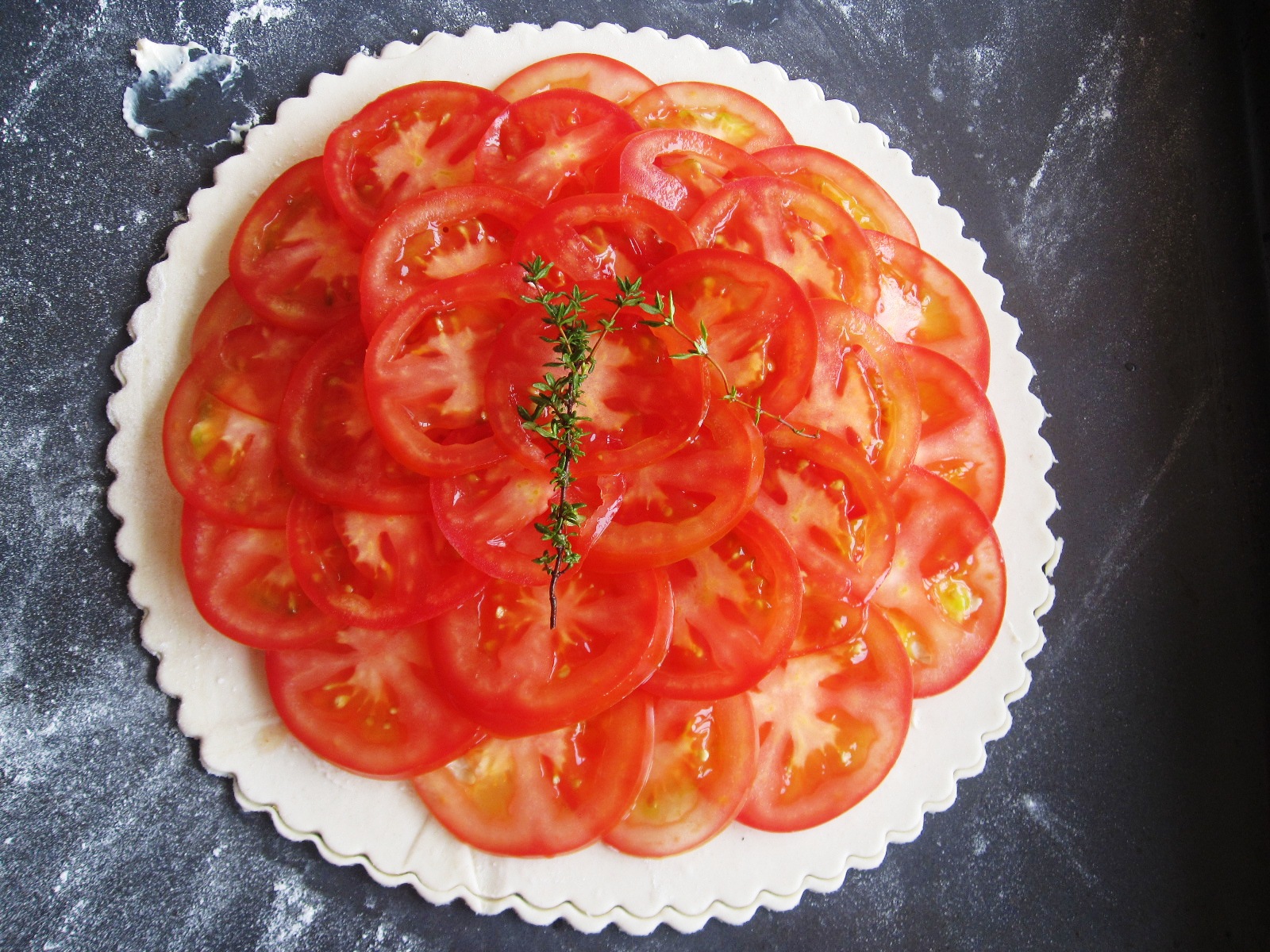
                                            INSALATA DI POMODORI
                                                       (Tomato Salad)


Tomato Salad 

Fresh Basil

Fresh Flatleaved Parsley
Spring Onions


I use garlic-scented olive oil, in the dressing instead of garlic.

5 medium-sized, ripe tomatoes, sliced

Vinaigrette
3 tbsp olive oil
1½ tbsp vinegar
¾ tbsp fresh basil, finely chopped
1 saltspoon  finely chopped garlic
Salt and freshly ground black pepper

30 g (1 oz) thinly sliced spring onions
½ tbsp finely chopped fresh parsley
2 twigs of fresh thyme


Arrange the tomatoes slices in slightly overlapping concentric circles.   Whip the vinaigrette ingredients together and pour over the tomatoes.   Combine the spring onions and parsley and sprinkle evenly on top.   Garnish with fresh thyme twigs.


                                                         G E L A T I 


                                                VANILLA ICE-CREAM

Nostalgia  -  Vanilla Ice-Cream


A Green Delight

For this ice-cream you must first prepare a custard with: 


420 ml (14 fl oz) single cream
½ a vanilla bean

8 egg yolks
125 g (4 oz) sugar
A good pinch of salt

250 ml (8 fl oz) double cream, whipped to soft peaks


Bring the single cream with a little sugar and the vanilla bean almost to the boil.  

Meanwhile whip the egg yolks with the remaining sugar and salt, until light, fluffy and doubled in bulk.  

Discard the vanilla bean and pour the hot cream slowly into the beaten egg yolks, beating gently and constantly.  

Pour the mixture back into the saucepan and simmer gently, stirring constantly with a wooden spoon, until it thickens to a custard that lightly coats the back of the spoon. 

Remove from the heat and strain the custard through a fine sieve and allow to cool to room temperature.  Fold in the whipped cream until well combined.

Spoon the custard into a bowl with a cover and freeze for 2 hours at least.
Then remove from the freezer and stir it vigorously and return it to the freezer.   Repeat the procedure twice more.    Transfer the ice cream into a container, cover and freeze.

Alternatively, pour the mixture into an ice-cream machine and freeze, following the manufacturer’s instructions.


One can use the same recipe (minus the vanilla bean) for pistachio ice-cream by adding:
2 tbsp ground pistachio nuts
7 drops green food colouring
A few crushed pistachio nuts for garnish


                                          CHOCOLATE ICE-CREAM


A Dark Temptation

Chocolate Curls

Do prepare this old-fashioned chocolate ice-cream. 


500 ml (2 cups) milk

4 large egg yolks
8 tbsp sugar
Pinch of salt

120 semisweet chocolate melted and cooled
Vanilla
500g (2 cups) double cream whipped to soft peaks

Heat milk, beat eggs and sugar together to make the custard as described in Vanilla Ice-Cream. (Please see recipe above).   Stir in the melted chocolate and the vanilla and strain into a bowl to cool.   Gently fold in the whipped cream until well combined.   Freeze as described above.


Garnish all these ice creams with chocolate curls, hot chocolate sauce, nuts and fresh fruit, such as strawberries, raspberries, cranberries and  peaches.  Also, decorate with whipped cream and strawberry and raspberry syrups.


Ripe Perfection


Red Beauties


A Summer Juicy Treat

Strawberry Sauce

Cream Whipped to Soft Peaks


 Here are a few more recipes connected with ice cream. 


                                                   STRAWBERRY SAUCE

This is a very useful ingredient to have in your pantry.     Many desserts can be prepared with this delightful sauce, also, it can be poured over ice-creams and desserts.  Use the same recipe for raspberry sauce, adding a little more sugar perhaps. (Please see image above)


500 g (1 lb) strawberries, hulled, blended and sieved
Sugar, please see below
½ tsp lemon juice to enhance the savour
1 liqueur glass brandy (I use Metaxa Brandy)

For every 250 ml (1 cup) of strawberry pulp, use 187.5 ml (¾ cup) sugar, place in a saucepan, stir and bring to a gentle simmer.  When the syrup thickens, add the lemon juice and  brandy and cook for 5 minutes more.  Cool, place in a prepared jar, seal and store in the fridge.


                                                 STRAWBERRY WATER ICE


Strawberry Granita

There could be nothing more satisfying on a hot summer’s day than a water ice made with fresh fruit or fresh fruit juice.  Use the same recipe for peaches and apricots.

250 ml (1 cup) sieved strawberry pulp

500 ml (2 cups) water
200 g (1 cup) sugar
A pinch of salt
1 tsp lemon juice

Heat water, add sugar and salt and stir until the sugar melts. Remove from the fire and set aside to cool.   Then add the lemon juice and the strawberry pulp and mix well together.

The easiest way to freeze a water ice is in an electric ice cream machine. Alternatively, freeze it in a covered ice cream tray, and when half frozen beat well and quickly return it to the freezer.   Repeat the procedure twice more.

(Serves 6)


                                            LEMON WATER ICE

                                             
Refreshing Lemon Granita


 Another very refreshing water ice!   

750 ml (3 cups) water
375 ml (1½ cups) sugar
1 small piece of lemon rind
125 ml (½cup) strained lemon juice
1 tsp grated lemon rind
1/8 tsp salt

Heat water with the lemon rind, add sugar and salt and stir until the sugar melts.  Remove from the fire, discard the lemon rind, and set aside to cool.   Add the lemon juice and grated rind and mix well.  Freeze according to the instructions given above.

Serve the granita in long glasses, garnished with mint leaves or grated lemon rind.

Wednesday, 23 September 2020

MASKS AGAINST COVID-19 AND THE DISPUTERS


 We all know that masks protect us from the deadly coronavirus disease, but unfortunately, there are certain of our compatriots who simply refuse wearing masks, thus spreading the plague. 


Vassilis Pliotas, one of Greece's supreme court prosecutors, declared yesterday, that all those who refuse to wear masks will be arrested.   He argued to his fellow prosecutors that those who spread scepticism about COVID -19 and refuse to follow the law concerning the obligation of wearing masks should be harshly punished.


Mr Pliotas believes that these disputers, by refusing to wear masks and encouraging others to do so, place their own health and the health of others at risk. 


Drivers of buses and other transit workers have expressed fears to the media about the number of passengers in public transportation who are going without masks, despite the fact that the police will drag them out of the vehicles.


There have also been anti-mask demonstrations around the country, any of them being parents who reject the government's mandatory mask order for all students.


I always considered my compatriots clever and extremely affectionate parents what on earth is happening to this ridiculous, unconcerned and phlegmatic group? 


Tuesday, 22 September 2020

STRICTER MEASURES IMPOSED IN ATHENS TO LIMIT THE SPREAD OF COVID-19


 A return to working at home for those employed in both private and public companies, along with stricter crowd control measures,  are some of the energy steps introduce in Attica on Monday.


Following the rise of the number of coronavirus infections, particularly in the centre of Athens and in consequence the rise of hospitalisations, new measures have been introduced as of Monday,  the 21st of September which will last through the 4th of October. 


The new measures are as follows:

1)  Indoor and outdoor gatherings are limited to nine people, except in areas already regulated such as restaurants.

2)  Indoor and outdoor concerts are suspended, as are indoor film screening,

3)  Baptisms, weddings and funerals may have a maximum of 20 people in attendance.

4)  People from vulnerable groups, such as migrants, who have tested positive for the virus but are unsystematic will be transferred to hotels and will be under medical care, there.  

5)  40% of private and public business employees must work from home.

6)  Public sector employees must arrive and depart from work in three stages (at 7.00, 8.00 and 9 am) 

7)  Private-sector companies, must do the same but using four stages.

8)  People of 65 or older, or belonging to vulnerable groups, must limit their social outings by 14 days,  Their contacts must be immediate family members.


 Hoping and praying that a vaccine against this deadly disease will soon be discovered, in order to save humanity from this terrible plague.